
By Ralf Jacobs
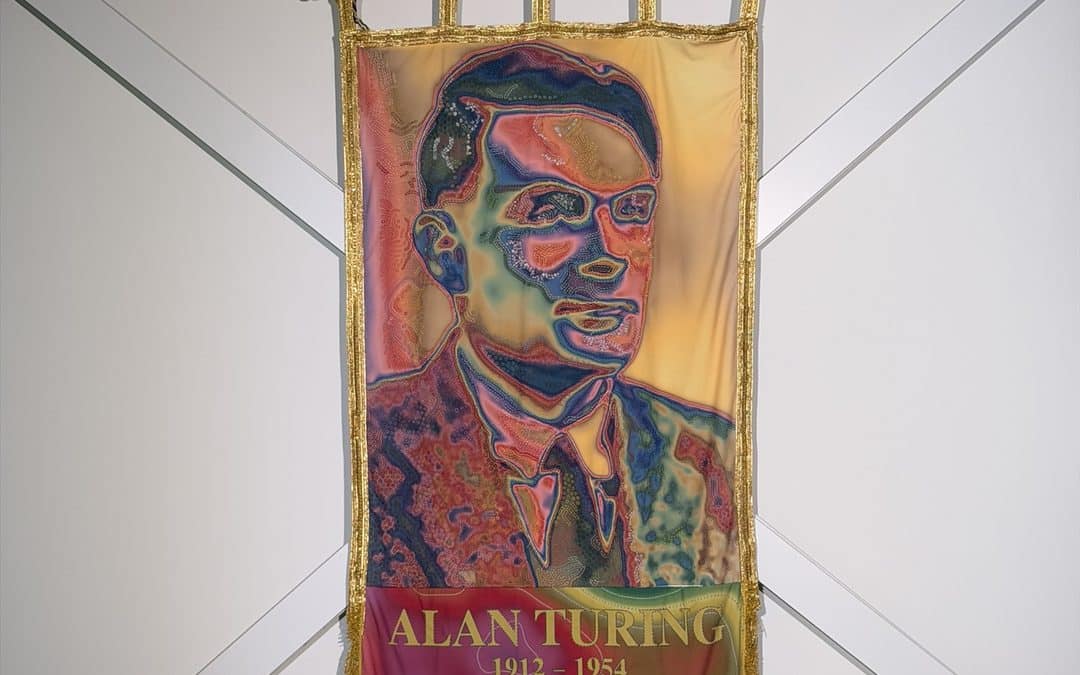
Saints get banners. So do kings, guilds and regiments: silk, gold thread, a pole to carry them through the streets. Queer heroes rarely do. This autumn, about thirty members of the Queer Needlework Circle in Eindhoven made one for Alan Turing.
In 1952 Turing published “The Chemical Basis of Morphogenesis”. It asks a simple question: how does a uniform ball of cells become an animal with stripes, spots and fingers? His answer was two chemicals, one that activates and one that inhibits, reacting and spreading at different speeds. Out of almost nothing, pattern appears. Seventy years later, biologists still find his mechanism at work in zebrafish skin, in the ridges of the palate, in the spacing of hair follicles.
That same year, Turing was convicted of gross indecency for his relationship with a man. He accepted chemical castration rather than prison. In June 1954 he was found dead, an apple half-eaten beside his bed.
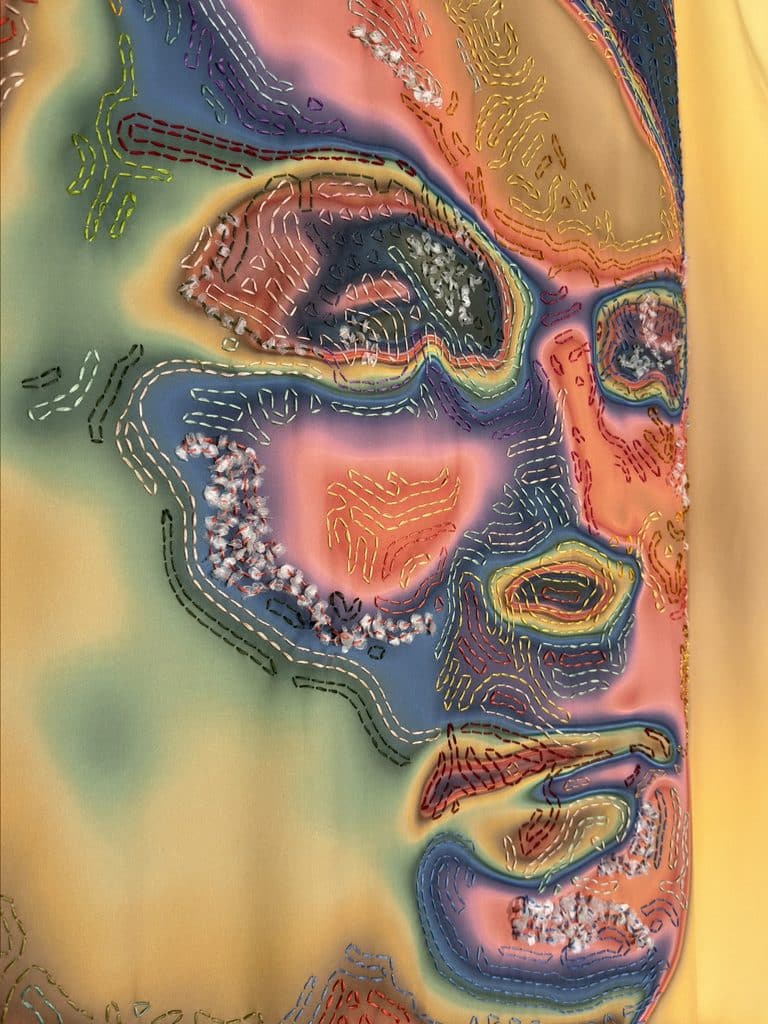
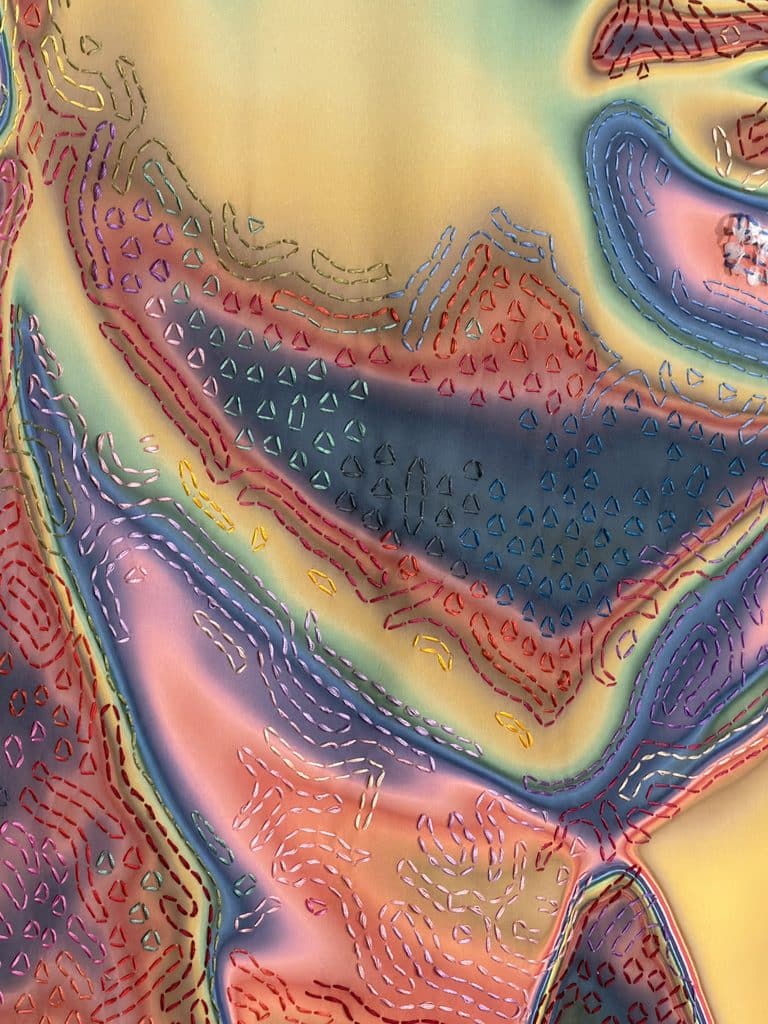
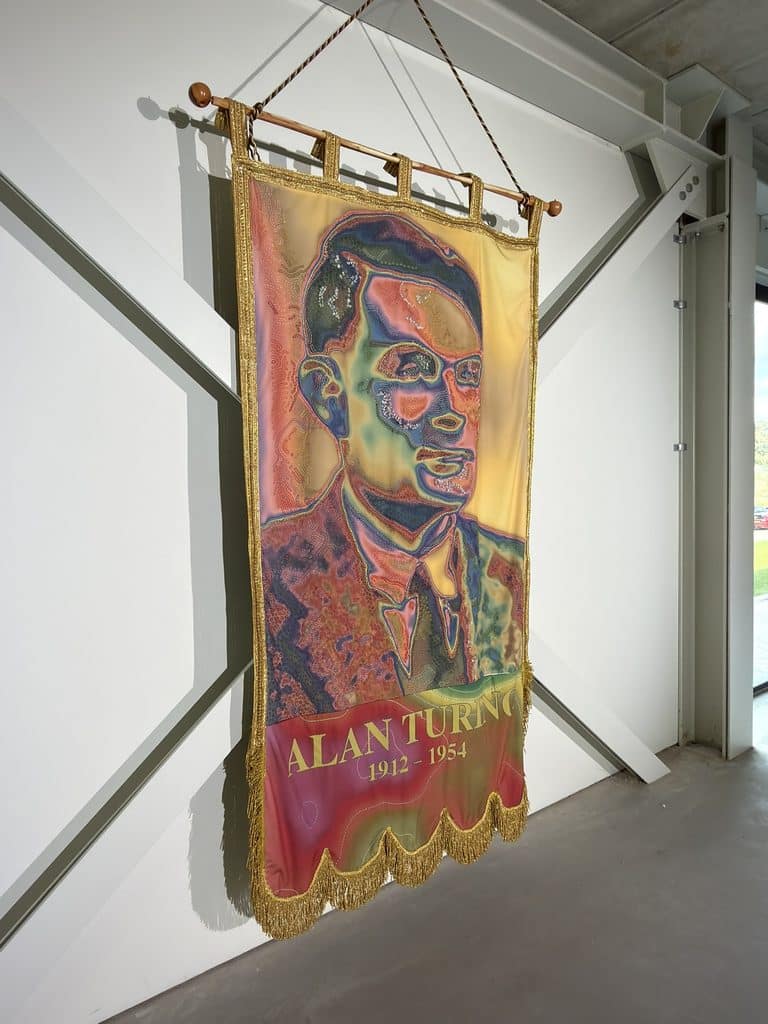
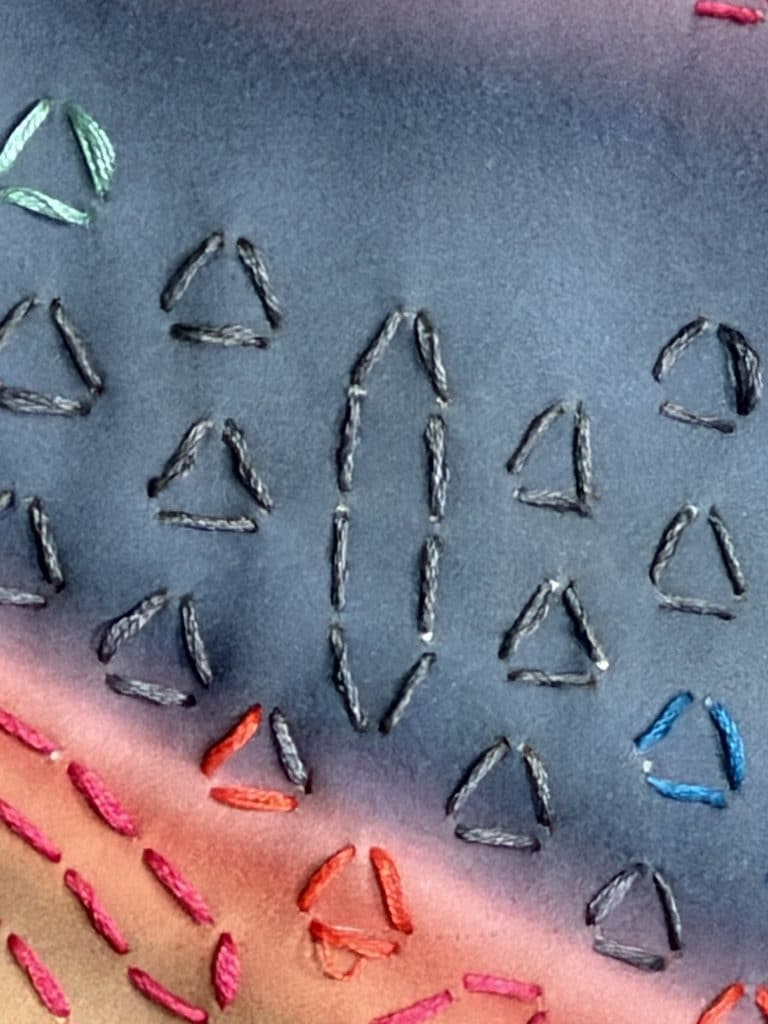
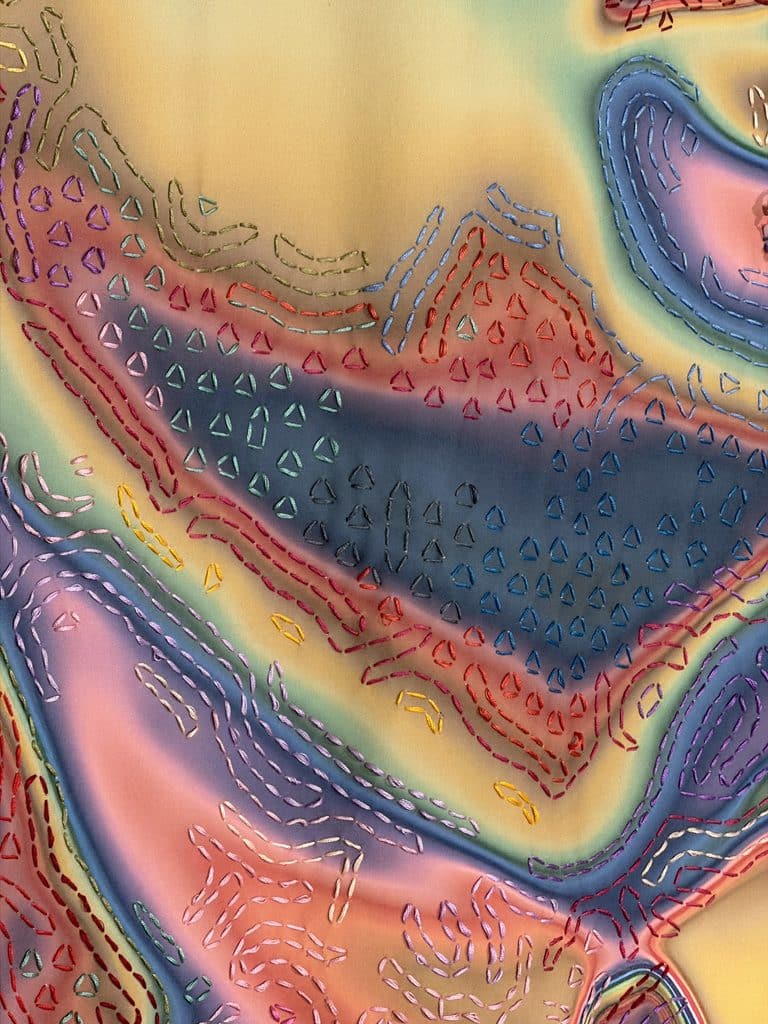
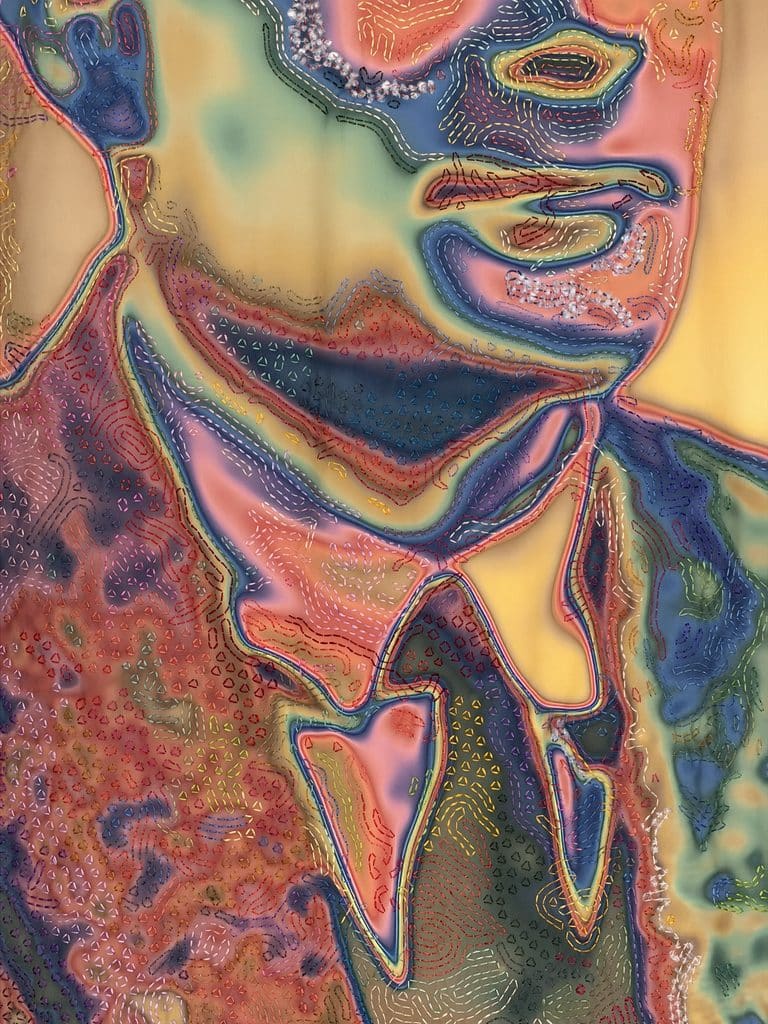
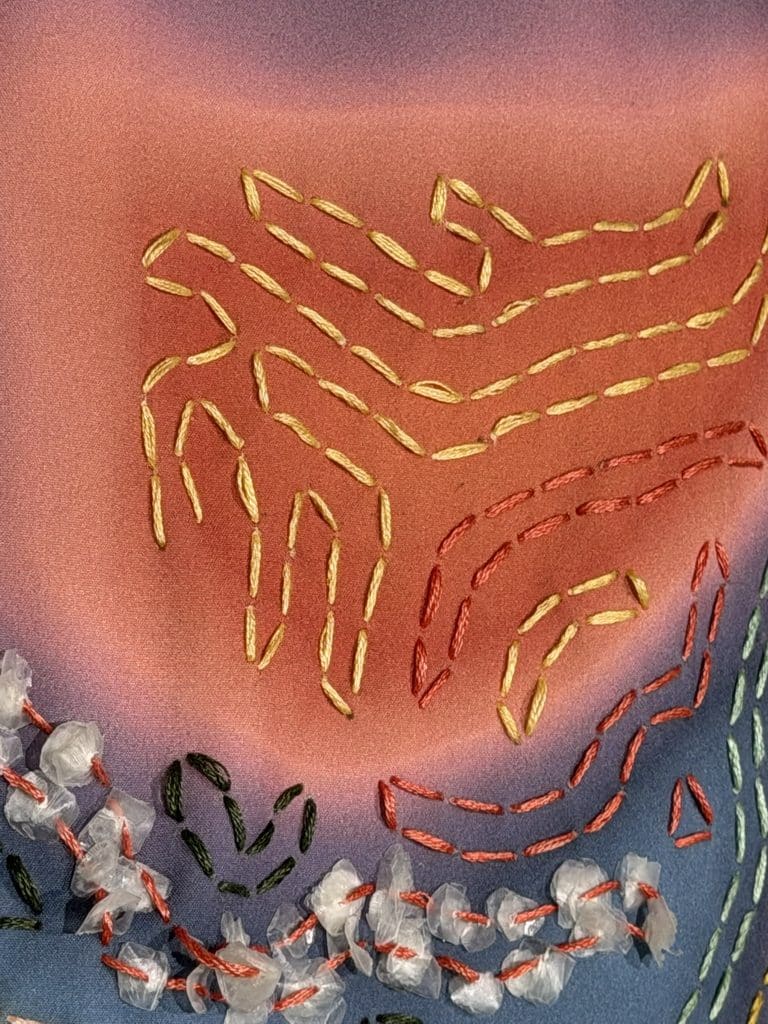
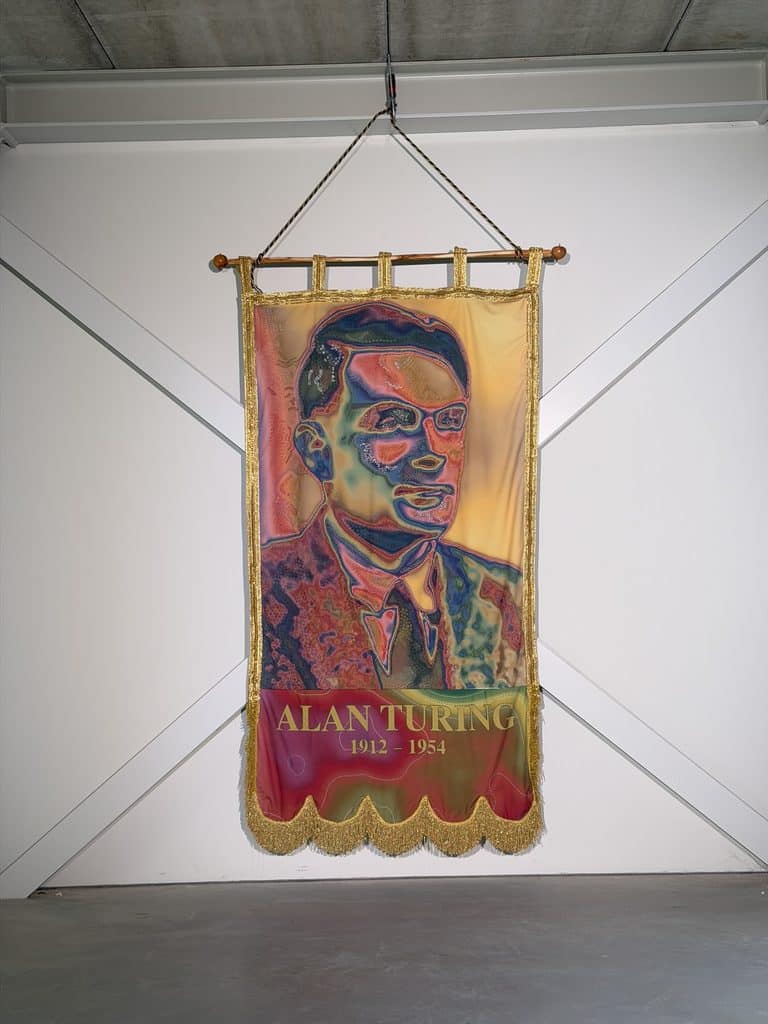
For the banner, I ran his 1952 equations on a photograph of his face. The grey values of the photo set the local reaction rate, so the pattern packs tight in the shadows and opens up in the light. Nothing is drawn; his portrait grows out of his own mathematics. The computed field was printed on cloth, 150 by 300 centimetres, and then the contour lines were stitched by hand in sashiko, a Japanese running stitch, by members of the circle sitting around the same tables at FashionTechFarm in Eindhoven.
That part matters to me as much as the maths. Turing’s work was solitary and his punishment was administered by institutions. The banner was made the opposite way: slowly, together, by people who could be open about who they are while they did it. Every one of them left their own hand in the line.
The rest borrows from devotional tradition. A goldwork border and a gold fringe frame the portrait. The banner hangs from a stave of yew, the churchyard tree of remembrance, and at each end of the stave sits an apple carved from the same wood.
I work as an optical engineer in the Dutch semiconductor industry, where every machine we build descends, in one way or another, from Turing’s 1936 paper on computable numbers. Making this was a way of paying a debt that my whole field owes.
The title is a wish rather than an epitaph. Turing was not saved by being brilliant. The next one should not have to be.
“So the Next One Will Live” was first shown at Dutch Design Week 2026. The banner travels and is available to be shown by schools, universities, companies, and festivals that want to mark what Turing gave us.
Ralf Jacobs is an artist and optical engineer based in Eindhoven, the Netherlands. / Instagram @raaaaaaaaaalf